


The Characteristics and Application of Ball Valve
Feb 03, 2023
The ball valve not only has simple structure and good sealing performance, but also has small volume, light weight, less material consumption, small installation size, small driving torque, easy operation, and easy air-tightness within a certain nominal size range. One of the fastest growing valve varieties. With the development of ball valves, there will be wider applications in the foreseeable short period of time, especially in oil and gas pipelines, refinery crackers, offshore oil, and nuclear industries.
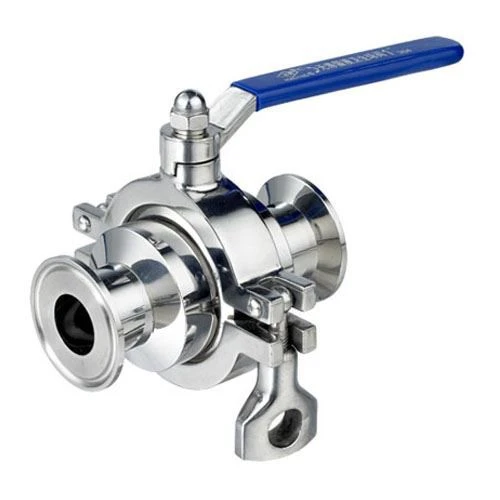
The main seat sealing ring material of ball valve is polytetrafluoroethylene (PTFE). It is inert to almost all chemical substances, and has the comprehensive characteristics of small friction coefficient, stable performance, not easy to age, wide application temperature and excellent sealing performance. However, the logistics characteristics of PTFE have a high expansion coefficient, sensitivity to cold flow and poor thermal conductivity, requiring that the sealing design of the valve seat must be carried out around these characteristics. Seat sealing plastic materials, including polytetrafluoroethylene family and filled polytetrafluoroethylene, nylon and other materials. But when the sealing material hardens, the reliability of the seal is compromised, especially at low differential pressures. In addition, synthetic rubber such as nitrile rubber can also be used as a valve seat sealing material, but its applicable medium and temperature are limited. Also, without lubrication, using synthetic rubber tends to seize the ball.
Xi'an Changxin Metal Products Co., Ltd. has continuously researched and developed ball valve production technology for many years, and developed a series of ball valves, such as Clamped Three-way Ball Valve, Clamp Non-retention Ball Valve, Cross Ball Valve and other valves. It has been widely used in chemical industry, environmental protection, petroleum and natural gas fields.


