


Why Choose Us
Powerful R&D Team
With an autonomous R&D team and a professional technical staff, our company strictly adheres to quality requirements in production and R&D processes for ensuring stable product quality.
OEM Serve
We also offer OEM services and customize products according to the specific needs of our clients, fully meeting all clients‘ requirements.
Professional Solutions
We provide our clients with fast and efficient hose, pipe fitting and valve manufacturing services and comprehensive solutions for piping systems through professional approaches.
Quality Control
Products produced under strict quality control require the inspection department to conduct quality inspection of the goods in the workshop.
What is Corrugated Hose
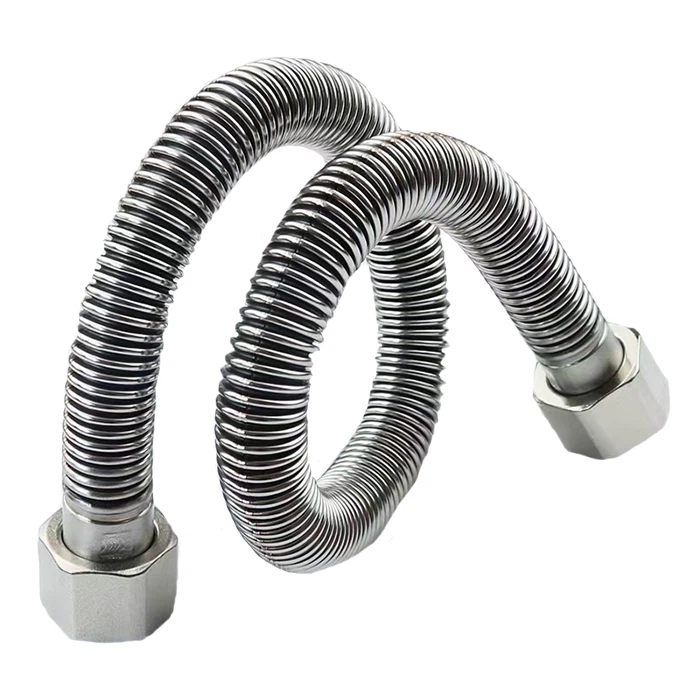
Corrugated hose is a flexible tube made up of multiple layers of metal or plastic materials that are folded in a zig-zag pattern to create ridges and grooves along its length. The corrugations allow the hose to bend and flex without kinking or collapsing, making it ideal for conveying fluids and gases in a variety of industrial, commercial, and residential applications. Corrugated hoses are commonly used to handle hot and cold water, air, steam, chemicals, and fuels, and are available in a range of sizes, materials, and configurations to suit specific needs.
-

Stainless Steel Corrugated Hose
1.Type:Plumbing Hose. 2.Application:Apartment,Water system,interior piping system,kitchen.
Add to Inquiry -
SS Corrugated Flexible Hose Pipe
Connector: Brass/stainless steel. Flat gasket: Silica gel /EPDM. Corrugated tube: 304SS. Outer
Add to Inquiry -
Corrugated Stainless Steel Hose
Connector: Brass/stainless steel. Flat gasket: Silica gel /EPDM. Corrugated tube: 304SS. Outer
Add to Inquiry -
Connector: Brass/stainless steel. Flat gasket: Silica gel /EPDM. Corrugated tube: 304SS. Outer
Add to Inquiry -
Stainless Steel Corrugated Flexible Hose
Connector: Brass/stainless steel. Flat gasket: Silica gel /EPDM. Corrugated tube: 304SS. Outer
Add to Inquiry -
Connector: Brass/stainless steel. Flat gasket: Silica gel /EPDM. Corrugated tube: 304SS. Outer
Add to Inquiry -
Connector: Brass/stainless steel. Flat gasket: Silica gel /EPDM. Corrugated tube: 304SS. Outer
Add to Inquiry -
Flexible Stainless Steel Corrugated Hose
Stainless Steel Corrugated Hose for water heater oil gas toilet;. 1.Corrugated Pipe: ss304 or
Add to Inquiry -
Connector: Brass/stainless steel. Flat gasket: Silica gel /EPDM. Corrugated tube: 304SS. Outer
Add to Inquiry


The corrugated hose is installed in the liquid conveying system as a flexible pressure-resistant pipe fitting to compensate the mutual displacement of the pipe or the connection end of the machine and equipment, absorb the vibration energy, and can play the role of vibration reduction, noise reduction, etc., with good flexibility and light weight. It is resistant to corrosion, fatigue, high and low temperature, and can be threaded.
Material
PE (polyethylene polyethylene)
PP (Polypropylene Polypropylene)
PA (nylon Polyamide)
Operating temperature
-30 ° C ~ +100 ° C short time up to +120 ° C
Characteristics
High flexibility, resistance to distortion and good bending performance. Abrasion resistance, acid corrosion resistance, etc.
Structure
Both internal and external are wave shaped.
Colour
Black, natural, and other colors can be customized (can be cut as needed).
Carrying capacity
It can withstand the heavy pressure of the foot, does not break, does not deform, can recover quickly, and has no damage itself.
Application range
It can be used in machine tools, power equipment, food machinery, automation equipment, motor motors, air conditioner refrigerators, automotive wiring harnesses, and protection of wire and cable from external wear and insulation.
Changxin: Professional corrugated hose manufacturers and suppliers in China. Welcome to wholesale high quality corrugated hose at competitive price from our factory.
Benefits of Corrugated Hose
Durability and Strength
Stainless steel is a highly durable material that can withstand extreme temperatures and pressures.It is also resistant to corrosion, making it ideal for use in environments where exposure to harsh chemicals and other corrosive substances is common.The corrugat design of these hoses provides additional strength and flexibilitytwist without kinking or collapsing.

Wide Range of Sizes and Styles
At Prime Hydraulic, we offer a wide range of sizes and styles of stainless steel corrugated hoses to choose from. Our hoses range in size from 1/4 inch to 6 inches in diameter we offer both standard and custom lengths to meet your specific needs. Our hoses are available in a variety of end fittings, including flanged, threaded, and quick-connect options.

High-Quality Materials
We use only the highest quality materials to manufacture our stainless steel corrugated hoses. Our hoses are made from Type 321 stainless steel, which offers excellent resistance to high temperatures and corrosion.We also use a variety of braiding materials, such as stainless steel and polypropylene, to provide additional strength and protection against wear and tear.

Superior Performance
They are highly flexible and can be used in a wide range of applications, including conveying liquids, gases, and other substances .The corrugated design of the hose allows it to expand and contract as needed, providing excellent flexibility and maneuverability.
What are the Applications of Corrugated Hose
Biotechnology industry
Used for multiple purposes within this sector, including fermentation labs used for research and development. Corrugated hose transports materials between fermentation tanks and storage units, with its clear exterior allowing accurate monitoring of material flow, clogging and material deposits within the tubing to enable quick remediation.
Food & beverage industry
Corrugated hose helps transport foods and beverages as it remains sterile, prevents particles from accumulating and retains integrity up to 500° F (260° C). PFA tubing is often used rather than stainless steel for filling water bottles.
Pharmaceutical industry
Due to its ability to preserve material purity, along with its resistance to chemicals, acids and other corrosive materials, Corrugated hose offers an excellent choice for a sector that relies on keeping contaminants out of its products.
Semiconductor and microprocessor industry
Used for the same reasons that research labs and pharmaceutical companies use it, Corrugated Hose preserves fluid purity. As PFA tubing also has a high resistance to chemicals, it’s extremely useful for keeping contaminants to a minimum while ensuring semiconductors and microprocessors are kept immaculate.
Components of Corrugated Hose
Corrugated metal hose assemblies are able to incorporate virtually any fitting that is able to be welded to the hose ends. Because of this, it is critical that the end fittings selected are appropriate for the intended application. Make sure the fittings are the right size, alloy, and pressure (designated by pipe schedule, tube gauge, pressure class, etc.) for the application, including any piping standards or specifications that must be met.
Braid collars are used to join the inner corrugated hose and the braid together during the cap welding process, where a TIG weld joins the hose, braid, and braid collar into the cap weld bead. A good cap weld becomes the base for the subsequent attachment weld. Additionally, the braid collar serves to isolate the last few corrugations from movement, as their cycle life may be compromised by the heat required to properly weld fittings to the hose. It is critical that the braid collars are sized properly in order to facilitate welding and to protect the last few corrugations from movement.
To give corrugated hose the ability to withstand high pressures, braid wires made from stainless steel or some other alloy are braided onto the hose. There are many variables that can affect how well the braid works, including the wire diameter, the number of wires per carrier (bobbin), and the number of carriers. Additionally, the performance of the hose may be enhanced by using multiple braid layers or braided braid. Hose Master knows that the proper braid design has a significant effect on both the working pressure and the cycle life of the hose. That is why we carefully design each braid package to ensure a high-percentage braid coverage, and we apply the braid directly onto our hose in all sizes to ensure that the braid fits tightly, protecting the hose from potential deformation and ensuring maximum cycle life.
The tube is the actual corrugated hose, which contains the media being conveyed and provides flexibility as required by the application. Hose Master employs various corrugating processes in order to produce the most flexible products in the industry, and our proprietary forming technology offers the best product for the majority of industrial applications.
Corrugated Hose Features
Flexibility
Corrugated hoses are highly flexible and can easily bend and twist around obstacles. This makes them perfect for use in confined spaces, where traditional hoses might be too rigid or inflexible.
Durability
These hoses are made from tough materials, such as stainless steel or PTFE, which are resistant to corrosion, high temperatures, and harsh chemicals. This enhances the longevity of the hoses and makes them ideal for such applications as vacuum hoses, fuel lines, and hydraulic hoses.
Lightweight
Despite being highly durable, corrugated hoses are lightweight and easy to handle. This makes them ideal for applications where weight is a concern, such as in the aerospace and automotive industries.
Cost-effective
These hoses are relatively low-cost when compared to other types of hoses. This makes them an attractive option for applications that require a high level of durability and flexibility, but do not require the specialized properties of other types of hoses.
Easy to Install
These hoses are typically easy to install and require minimal tools, making them ideal for use in applications where time is a concern, or where installation must be completed quickly.
Versatility
Corrugated hoses come in a variety of sizes and materials, allowing them to be used in a wide range of applications. This makes them a versatile option for HVAC systems, industrial machinery, and other applications where flexible hose connections are necessary.
Material selection
The first step in the manufacturing process is to select the appropriate type and grade of stainless steel for the corrugated hose based on the application requirements. Stainless steel grades commonly used for corrugated hoses include 304, 316, and 321.
Corrugation process
The stainless steel strip is then corrugated or formed into a series of ridges and valleys using a hydraulic or mechanical corrugation machine. This creates the characteristic flexibility and strength of the hose.
Welding
The ends of the corrugated hose are then welded together to create a seamless tube. TIG welding or high-frequency welding methods are commonly used.
Braiding
The corrugated hose may then be braided with one or more layers of stainless steel wire to provide additional strength and protection against external abrasion.
Fitting attachment
The ends of the corrugated hose are fitted with end fittings, which can be threaded, flanged, or other types of connections depending on the application requirements. The end fittings are typically attached using a welding or brazing process.
Testing
The finished stainless steel corrugated hose is then tested to ensure that it meets the required specifications for pressure, temperature, and flexibility. Various types of testing methods may be used, including hydrostatic testing, pneumatic testing, and vacuum testing.
Maintenance Tips for Corrugated Hose
Make sure you choose the right hose for the task
Always consider the pressure that the machine can exert on the hose and the kind of water force that you want to flow out for a particular task. You need to decide on size of the hose that you need and also the viscosity of the fluid that is going to be used for the cleaning purpose in order to make sure that the hose works properly and would serve the purpose well. In case too much pressure is applied on the hose, then that might shorten its overall life.
Inspect the hose before using it
At times, you might be handed a defective nitrogen hose which might contain small holes that are not visible to the eye. Keep a check on the cracking and blisters as they are certainly not good to be used for the work. Also, you should never use hoses that are on the stage of getting deteriorated.
Install sheath to protect the hose from external factors
If you happen to live in extreme weather conditions, then it is better that you need to install sheaths in order to protect the hose from external elements and harmful factors that might affect their quality over time.
Always store them in cool and dry place
The heat from the sun can affect the quality of the hydraulic hose and the moisture too can have same effect on the same. It is advised that you store the hose in a cool and dry place so that they do not age faster and would be useful for a longer period of time.
Regularly clean the fittings
It is necessary to clean up the fittings of the hydraulic hoses regularly and also inspect them for dirt, dust, and debris that might affect the performance of the hose over time. Use a clean cloth or a cleaning chemical to wash off the dirt from the hose.
Take up an action in case the hose fails
You must turn off the machine and let it release pressure after which you can disconnect the hose and inspect it if there is a leakage or not. If there is an issue you can either apply a seal or get the hose replaced so as to avoid the wastage of the fluid.
Our Company
Xi'an Changxin Hardware Co.,Ltd. was established in 2010, who is a leading supplier and manufacturer of flexible hoses, faucets, bathroom accessories,valves,pipe fittings and sanitary valves & fittings in China. It is well known in local market and overseas because of exporting their products to more than 80 countries with high quality products and thoughtful services.The company pays attention to every detail of the product from sample drawings to finished products, and carefully incubates every innovative idea. Our products are produced under strict quality control. The inspection department is required to conduct quality inspection of the goods in the workshop. Water testing, gas testing, and pressure testing are our common tests to ensure high-quality products and ensure that customers can cooperate with us without any worries.
FAQ
Q: Is corrugated metal steel or aluminum?
Q: What are the uses of corrugated hoses?
Q: What materials are used to make corrugated hoses?
Q: What are the benefits of using corrugated hoses?
Q: How are corrugated hoses made?
Q: What factors should be considered when choosing a corrugated hose?
Q: Are corrugated hoses safe to use?
Q: How is corrugated metal hose made?
Q: What are the components of a hose made up of?
Q: What is corrugated flexible hose?
Q: What is inside stainless steel hose?
Q: What is the difference between rubber hose and flex hose?
Q: What is corrugated metal made of?
Q: How do you install and maintain a corrugated hose?
Q: What is a corrugated hose?
Q: What is corrugated pipe for?
Q: What is the difference between convoluted and corrugated hose?
Q: Is corrugated pipe stronger than PVC?
Q: Is a stainless steel hose worth it?
Q: Are stainless steel hoses better?
